
Last updated November 24, 2026
 Sweep & inspection
 Caps & crowns
 Flue relining
 Masonry repair
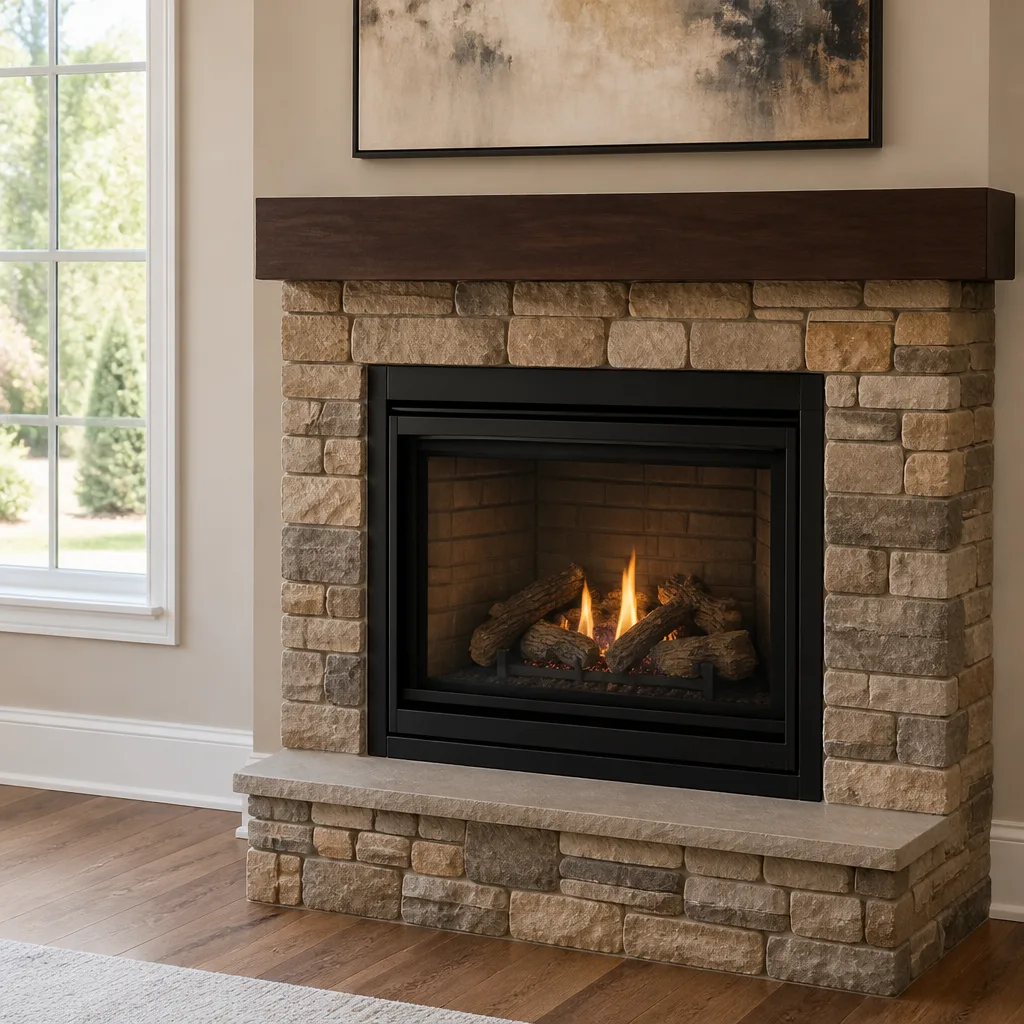 Gas fireplace service
Level 1 sweep and inspection to the NFPA 211 annual standard - flue, crown, cap, and flashing checked and photographed
Chimney sweep logs do not sweep chimneys. They loosen some creosote - which then falls where a brush and vacuum still have to collect it.
Chimney Cleaning Warning Signs: An Ogden Homeowner’s Reference Guide
A strong campfire smell in the house during summer, months after the fireplace last had a fire in it, is one of the most reliable signs of Stage 2 or 3 creosote buildup. Most homeowners assume it’s the neighbor’s grill or something in the walls. They don’t connect it to the chimney. That disconnect is the whole problem: chimney problems almost always announce themselves long before they become dangerous, but only if you know what you’re looking at. This reference guide connects observable symptoms to their underlying causes so Ogden homeowners can describe a problem accurately, judge how urgent it is, and call for help with useful information instead of a guess.
Quick Answer
The core warning signs of a chimney that needs cleaning are smoke backing into the room, a smoky or campfire smell when no fire is burning, visible creosote flaking inside the firebox or flue, fires that struggle to catch or draft, and exterior clues like white staining on the brick or receding mortar. Three signs mean stop using the fireplace right away: a white haze on the firebox walls, cracked firebox masonry, and flue tile fragments sitting on the firebox floor. Anything else on the list usually means schedule a sweep soon, not today.
Styles & brands we work with
- Sweep & inspection
- Caps & crowns
- Flue relining
- Masonry repair
- Gas fireplace service
Table of Contents
- The Symptom-to-Cause Index
- Stop Using the Fireplace vs. Schedule a Sweep
- Interior Warning Signs: What You See Inside
- Smell Without Fire: The Creosote Signal
- Ogden Draft Problems and Valley Air Pressure
- Animal Entry Signs After Spring Migration
- Exterior Warning Signs: Brick, Mortar, and Caps
- How to Photograph and Describe a Warning Sign
The Symptom-to-Cause Index
Most people call a sweep with a feeling, not a diagnosis. “Something’s not right with the fireplace” is hard to triage. A specific observation (“smoke rolls out over the top of the firebox when I first light it, then settles down”) gives a technician enough to tell you whether to wait or act now. This index maps the symptoms we hear most often in Ogden to the causes behind them.
- Smoke spilling into the room, especially on startup. Usually a draft problem. It can be a cold flue, a flue that’s too short for the house, a closed or blocked damper, or a firebox opening that’s out of proportion to the flue. Creosote narrowing the flue makes it worse.
- Smoky smell with no fire burning. Creosote in the flue is off-gassing, especially on warm humid days. Strong Stage 2 or Stage 3 buildup is the usual culprit, and summer is when it’s most noticeable.
- Flaking or crusty black deposits visible above the damper. This is creosote, and the texture tells you a lot. Sooty, dry flakes wipe away easily. Crinkled, bubbly, or tar-like deposits are advanced and call for a professional cleaning, not a brush on a pole from the hardware store.
- Fires that are slow to catch and burn lazily. Poor draft, often combined with a partially blocked flue. Wet wood makes it worse, but if the same seasoned wood used to light fine, suspect the chimney.
- Dark staining on the exterior brick or white chalky haze (efflorescence). Water is getting into the masonry through a failed crown, cracked cap, or open mortar joints. This is an exterior diagnosis with an interior cause.
- A white haze inside the firebox or cracked firebox panels. This points to heat damage in the firebox itself and needs to be looked at before the next fire.
- Flue tile fragments on the firebox floor. The liner is breaking down. Stop using the fireplace and get it inspected.
- Birds, nests, or debris dropping into the firebox. A missing or damaged cap. Common in Ogden after spring migration, and it can block the flue entirely.
Read the list once, walk to your fireplace, and look. Most of these you can spot yourself in two minutes. That’s the whole point of a symptom index: it lets you bring a fact to the conversation, not a feeling.
Stop Using the Fireplace vs. Schedule a Sweep
The most useful distinction in this guide is also the one most homeowners get wrong. Some warning signs mean “book a cleaning in the next few weeks.” Others mean “don’t light another fire until someone looks at this.” Sorting between them is the single biggest safety decision you’ll make with your chimney, so treat it as a two-column list.
Stop using the fireplace immediately if you see:
- A white haze or white staining inside the firebox. This can indicate the firebox has been overheated, and the masonry or refractory panels may no longer be sound.
- Cracked or crumbling firebox walls. Heat and gases can pass through cracks into the surrounding structure. This is a fire risk, not a cosmetic issue.
- Flue tile fragments on the firebox floor. Pieces of the liner are falling apart, which means the flue is no longer containing what it’s supposed to contain.
- A strong chemical or tar smell that doesn’t clear. Advanced creosote can ignite. Stop and have it cleaned.
Schedule a sweep soon (not today) if you see:
- Sooty or flaky creosote deposits you can reach with a flashlight and a mirror.
- Smoke rolling out on startup but settling once the flue warms.
- A campfire smell in the house on warm days.
- Efflorescence, receding mortar, or a loose cap on the exterior.
- A fire that’s fussier than it used to be.
In our experience, the stop-now column is shorter than people expect. That’s deliberate. Most warning signs are an invitation to schedule, not a reason to panic. But the three or four in the first column are there for a reason, and they’re the ones we won’t tell you to “keep an eye on.”
Interior Warning Signs: What You See Inside
The firebox is the easiest place to inspect because you can see it from the living room floor. Get a flashlight, kneel down, and look at four things: the walls, the floor, the damper, and the flue opening above it. A clean, healthy firebox should be uniform in color, with intact mortar joints and no loose material.
Here’s what each observation means:
- The firebox walls. A white, chalky haze or crazing (fine surface cracks like a dried mud puddle) points to overheating. Small hairline surface cracks are common and not always serious. Deep cracks, missing chunks, or cracks that let light through are a different story and mean stop using it.
- The firebox floor. Any tile fragments, sand, or grit that doesn’t match your firebrick is a sign the flue liner above is shedding. Sweep it up and look again after the next fire. If it keeps coming back, the liner is failing.
- The damper. Open and close it. It should move freely and sit flat when closed. A damper that’s stuck open, rusted shut, or missing altogether changes how the whole system drafts. A missing damper is common in older Ogden homes and often goes unnoticed.
- The smoke chamber above the damper. Shine a light up. You’ll see either a smooth, sloped surface or a jagged, corbelled one. Jagged surfaces collect creosote and are harder to sweep, but they can be restored with a ceramic resurfacing product like HeatShield, which we use to smooth and seal the smoke chamber without rebuilding it.
While you’re down there, check for rust stains or water marks on the firebox floor or the damper. Rust means water is coming down the flue, and the usual cause is a failed cap or crown up top. That’s a chimney cap and crown conversation, not a sweeping one, but it belongs in the same inspection.
Smell Without Fire: The Creosote Signal
Creosote has a distinct smell: smoky, tarry, and a little like a campfire that’s been rained on. When the fireplace is cold and the house is warm, that smell can travel down the flue and into the room. Summer is when homeowners notice it most, because the temperature difference between the outside air and the chimney is largest and air pressure pushes the smell back into the house. If you’ve ever walked past your fireplace in July and thought “why does it smell like a bonfire in here,” you’ve met this signal firsthand.
The strength of the smell tracks roughly with how much creosote is in the flue. A faint whiff on a hot day is worth scheduling a sweep. A strong, persistent smell that fills the room and doesn’t clear is a sign of heavy buildup, and it’s the point where we’d want to see the flue before the next burning season starts.
Two other smell signals are worth knowing:
- A chemical or solvent smell. This can come from creosote glaze (Stage 3) or from chimney cleaning products left behind. If you haven’t had the chimney cleaned recently, treat it as a glazed-creosote warning.
- A musty, damp smell. Water, not creosote. Look for a missing cap, cracked crown, or open mortar joints. Damp masonry damages the chimney over time and makes the creosote problem worse.
The reason the summer smell matters so much is timing. It appears in the off-season, months before you’d otherwise think about the chimney. That’s a gift: it gives you time to book a chimney sweep before the first cold snap, when everyone else in Ogden is calling at once.
Ogden Draft Problems and Valley Air Pressure
Ogden sits in a valley, and valley air pressure behaves differently from pressure on the bench or up the canyons. On still, cold mornings, the cold dense air settles low and pushes against the top of the chimney. That pressure can overcome the weak draft a cold flue produces, and smoke rolls out into the room instead of rising. The same house that drafts perfectly on a windy afternoon can smoke on a still January morning. If your fireplace is moody with the weather, that’s a real clue, not a quirk.
Signs that a draft problem is pressure-related rather than a blockage:
- Smoke spills on startup and then settles once the flue warms.
- Problems are worse on still days and better on windy ones.
- Cracking a window an inch or two near the fireplace improves the draft.
- The fireplace in the basement or lowest level is the worst offender in the house.
Signs that it’s more likely a blockage or a sizing issue:
- Smoke spills constantly, not just on startup.
- The fire burns lazily no matter how dry the wood is.
- You can see or smell creosote, or you’ve had birds or debris in the firebox.
We see the pressure problem a lot in Ogden homes with tall, narrow flues and in houses that have had windows replaced or weatherstripping added, which tightens the house and starves the fireplace of the air it needs. The fix varies: sometimes a top-sealing damper, sometimes a flue extension, sometimes just a different lighting routine. To know which, someone has to look at the whole system. That’s what a Chimney Sweep Ogden inspection is for.
Animal Entry Signs After Spring Migration
Ogden’s spring migration brings a lot of birds through the valley, and a chimney without a proper cap is a nesting cavity. By the time you notice, the nest is often already in place. The signs are usually unmistakable once you know them:
- Scratching or flapping sounds from the chimney, often in the morning.
- Debris dropping into the firebox: twigs, grass, feathers, or dried leaves.
- A bird visible in the firebox (with the damper closed, this happens more than you’d think).
- A smell of droppings in the room or near the hearth.
- A blocked flue that shows up as smoke or poor draft on the first fire of fall.
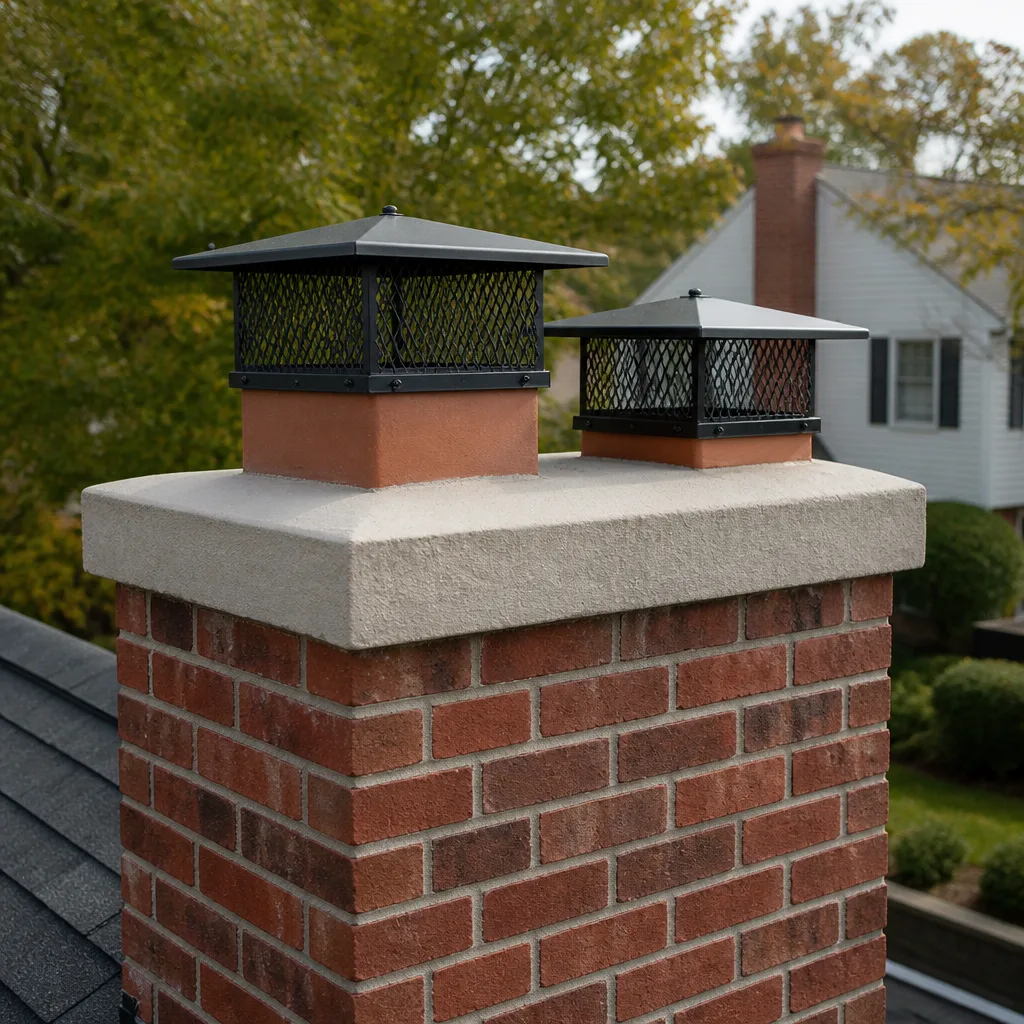
Never light a fire with a nest or bird in the chimney. Get it cleared first. The right long-term fix is a properly fitted cap from a supplier like Copperfield or Famco, installed so it keeps animals out without choking the draft. A screen that’s too fine will clog with soot and creosote; a screen that’s too coarse won’t keep out a determined bird. We install manufacturer-sourced caps rather than fabricating one on the job, because a cap that’s the wrong size for the flue is its own warning sign waiting to happen.
Exterior Warning Signs: Brick, Mortar, and Caps
Walk outside and look at your chimney from the ground, ideally with binoculars. The exterior tells you about water and wind long before the interior shows it. Three exterior clues matter most in Ogden:
1. Efflorescence
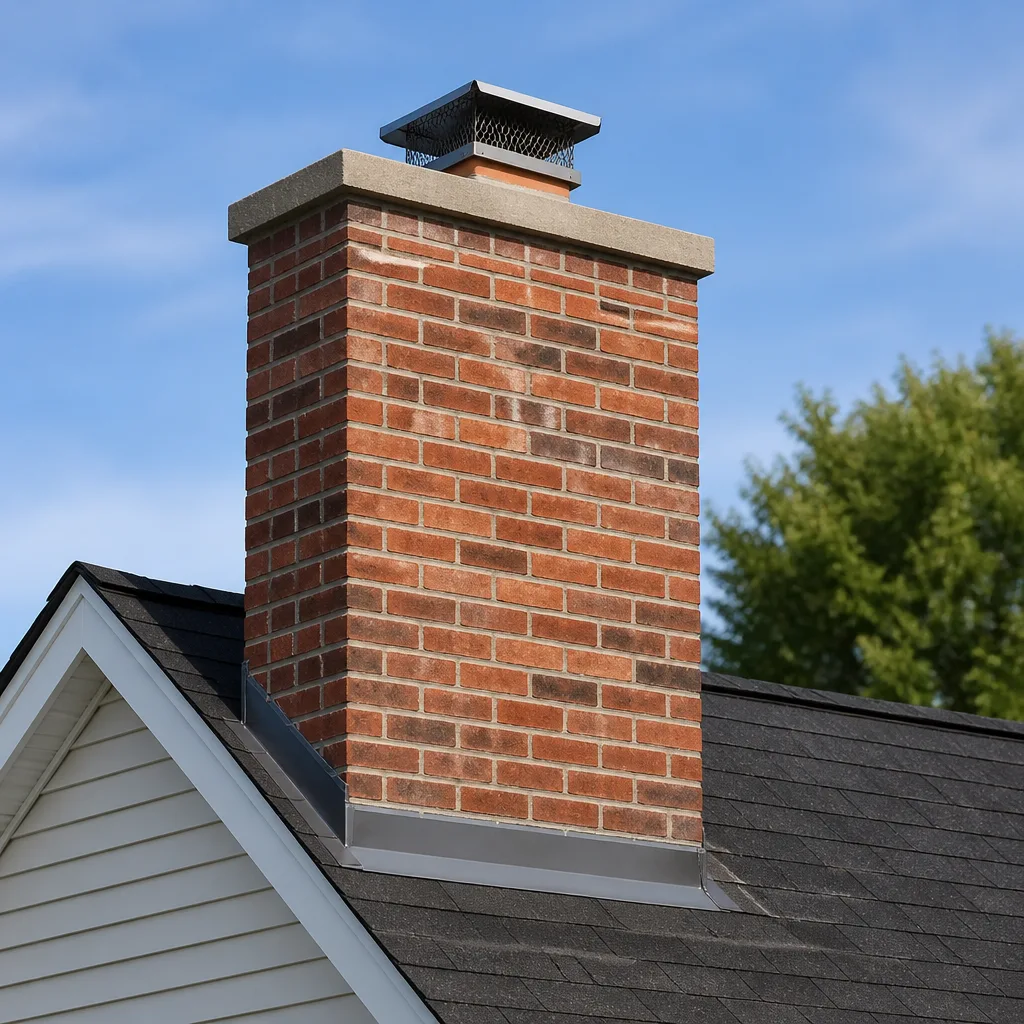
That white, chalky powder on the brick is called efflorescence, and it’s salt drawn out of the masonry by water moving through it. It’s not dangerous by itself, but it’s a reliable sign that water is getting into the chimney somewhere. The usual path is a cracked crown at the top, a failed flashing at the roof line, or open mortar joints. If you see it, find the source.
2. Mortar joint recession
Look at the mortar lines between the bricks. If they’re hollowed out, crumbly, or receding compared to the mortar on the rest of the house, the chimney is weathering. That’s normal over time, but receded joints let more water in, which accelerates the problem. In a freeze-thaw climate like Ogden’s, water that gets into the masonry expands when it freezes and spalls the brick face. Catch it early and the repair is straightforward. Ignore it for a few winters and you’re looking at more involved work.
3. Displaced, loose, or missing caps
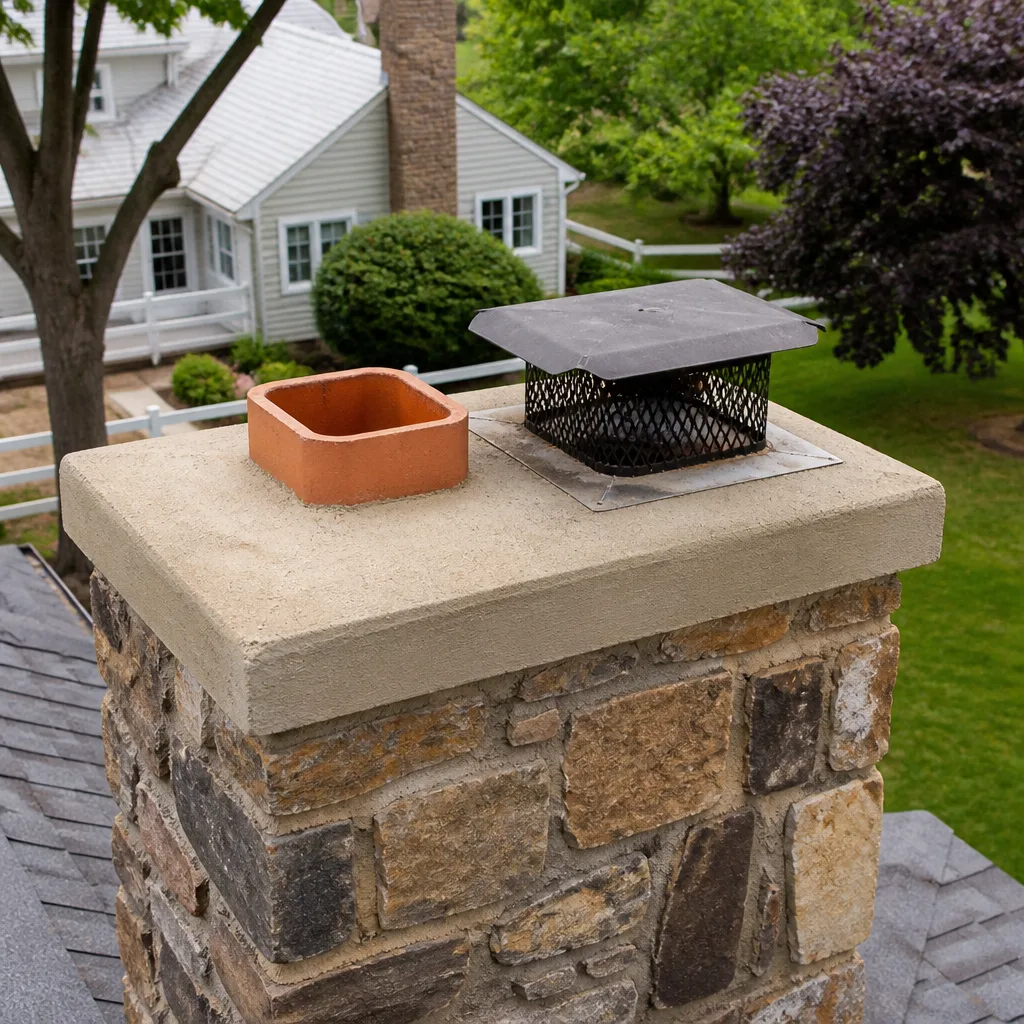
Ogden gets wind events that will lift a poorly fastened cap or shift it off center. A cap that’s off its flue opening is an open door for rain, birds, and debris. Look for a cap that’s tilted, sitting crooked, or gone entirely. Also look at the crown itself, the concrete cap that covers the top of the chimney. Cracks in the crown are the most common source of water intrusion we find on Ogden chimneys, and they’re cheap to fix early and more expensive to fix late.
Caps and crowns are a full category of our work, and it’s one worth taking seriously: a lot of “chimney leaks” end at the chimney cap & crown rather than the flue.
How to Photograph and Describe a Warning Sign
You can save a lot of time on the phone by taking two or three useful photos and describing the problem in plain language. A technician triaging over the phone needs specific details, not a long story. Here’s how to gather them.
Step 1: Photograph the firebox
Use your phone’s flashlight. Take a wide shot of the whole firebox, then close-ups of anything that looks odd: cracks, white haze, flaking deposits, tile fragments on the floor. Don’t try to reach up into the flue; leave that to the sweep. The camera doesn’t need to be perfect. It needs to be in focus and lit.
Step 2: Photograph the exterior from the ground
Stand back and get the whole chimney in frame. Then zoom in on the cap and crown if you can see them. If you have binoculars, use them to check whether the cap is centered over the flue opening. Note whether the white staining or crumbling mortar is on all four sides or just one (which matters, because one-sided damage often points to a roof-line leak rather than a top-down problem).
Step 3: Write down these six details
- What you smell, and whether the smell is constant or only on warm days.
- When the smoke happens: on startup, throughout the fire, or only on certain days.
- What the deposits look like: dry and flaky, crinkled and bubbly, or tar-like.
- Whether the cap is present and centered, and whether the crown looks cracked.
- The type of fireplace and fuel: wood-burning fireplace, insert, or gas.
- Whether the fireplace is on an exterior or interior wall. It changes how the flue drafts.
With those six items, we can usually tell you whether it’s a stop-now or a schedule-soon, whether a basic sweep is likely to do it, and whether you should be thinking about a fireplace repair at the same time. It also tells us whether you’ll need a certified inspection before anything else.
Common Mistakes to Avoid
- Assuming the summer smell is the neighbor’s fire pit. If the smell is inside the house and the fireplace is cold, it’s your chimney. Check the flue before you rule it out.
- Burning a “cleaning log” and calling it a sweep. Those logs are a maintenance product at best, not a substitute for a brush-and-vacuum cleaning. They don’t remove the hardened deposits, and they can accelerate glazed creosote if it’s already forming.
- Waiting until the first cold snap to book. Ogden’s sweep schedule fills quickly once temperatures drop. The smell you notice in July is your reminder to book in August, not October.
- Putting the wrong cap on in a hurry. A cap that’s too restrictive chokes the draft, and a cap that’s too loose doesn’t keep out birds. Match the cap to the flue, and use a manufacturer-sourced component (Copperfield, Famco, and Olympia Chimney all make ones that fit properly).
- Ignoring exterior damage because the fire “works fine.” Efflorescence and receding mortar are early-stage water problems. They don’t affect the fire until they do, and by then the damage is deeper.
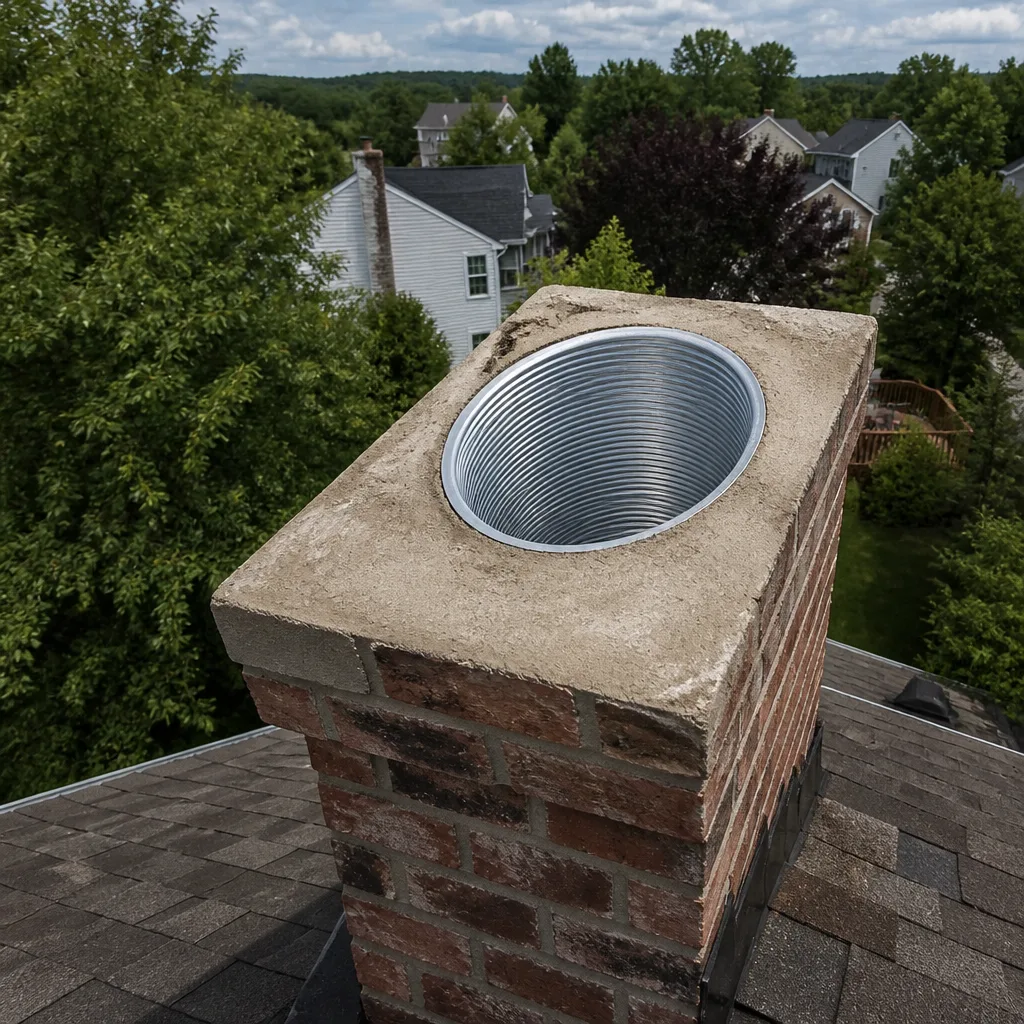
- Hiring a general handyman for a chimney problem. A chimney is a system, not a masonry job. A contractor who sweeps chimneys on the side can’t offer the full diagnostic picture, and won’t have the liner systems (DuraFlex, HeatShield) that a specialist does.
- Treating a white haze in the firebox as cosmetic. It isn’t. It’s an overheating signal, and it’s on the stop-now list for a reason.
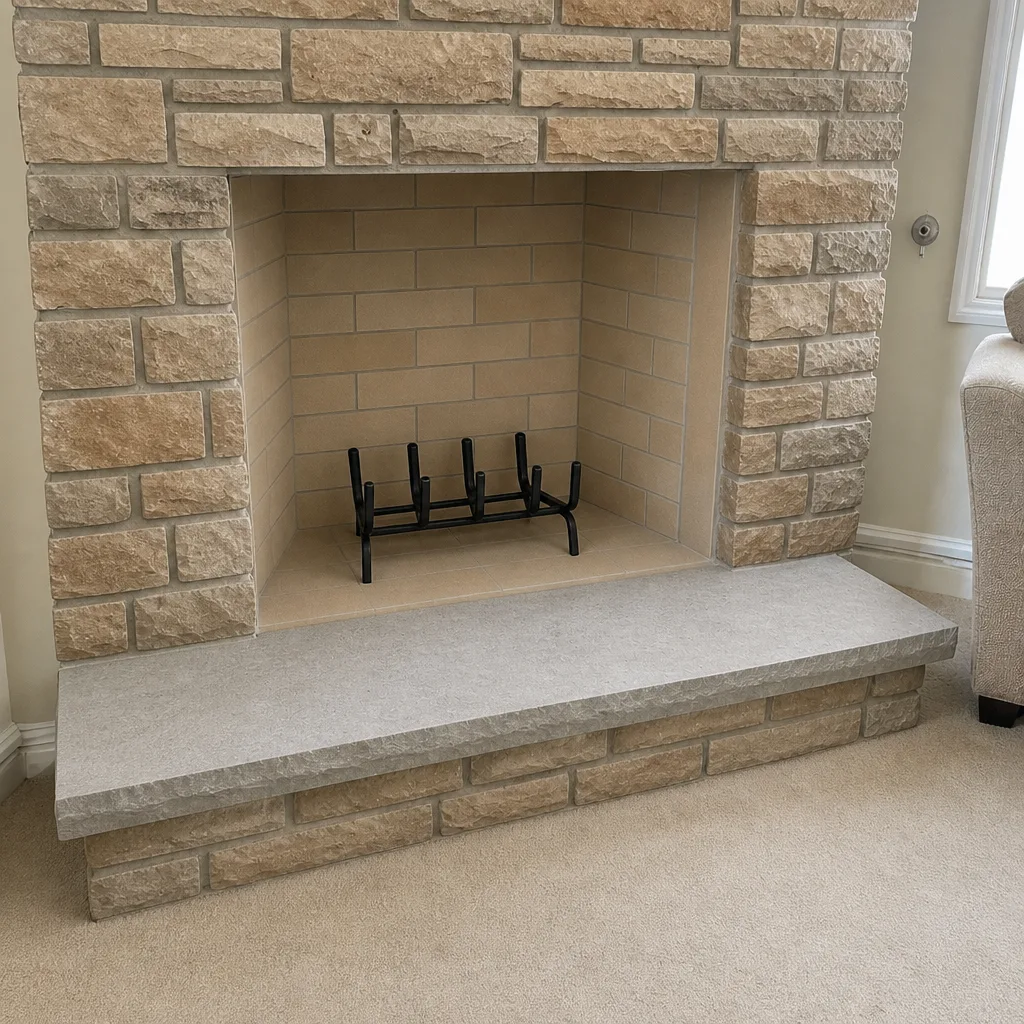
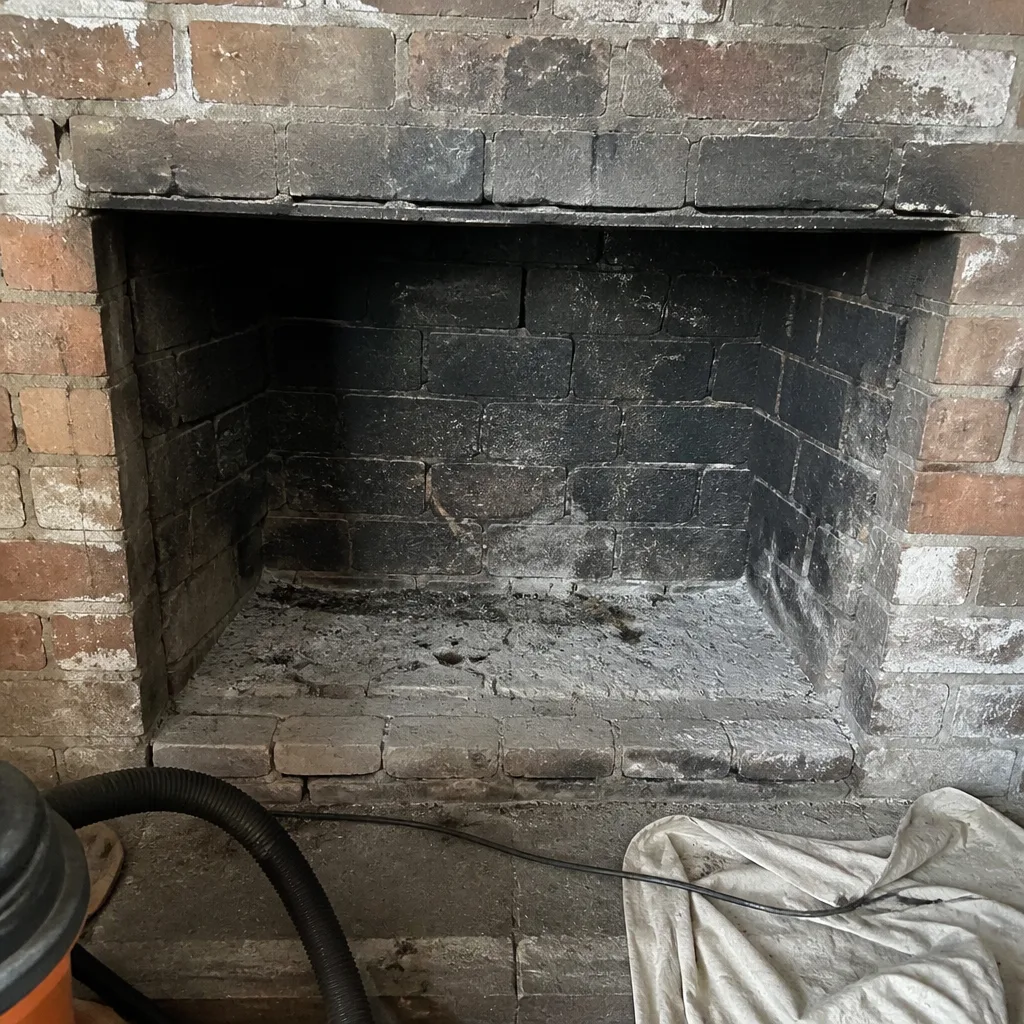
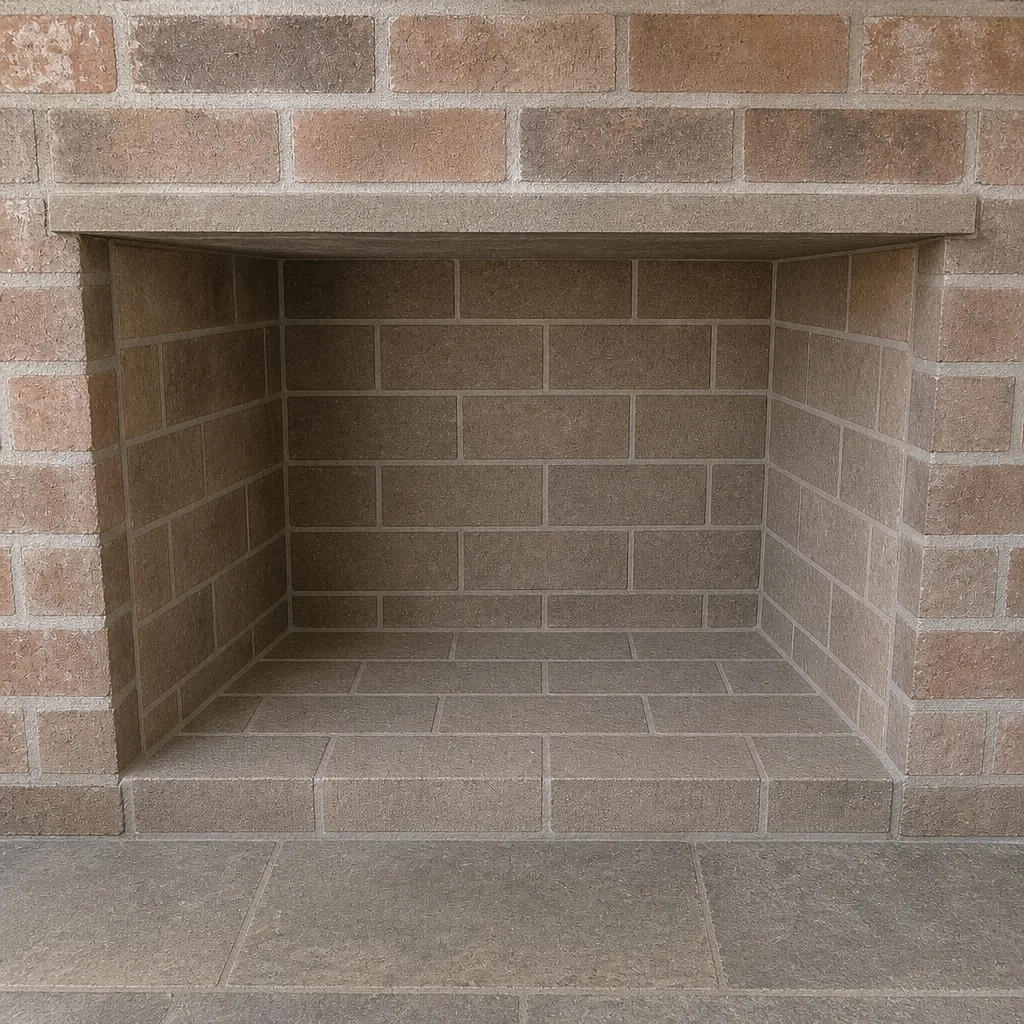
See the difference
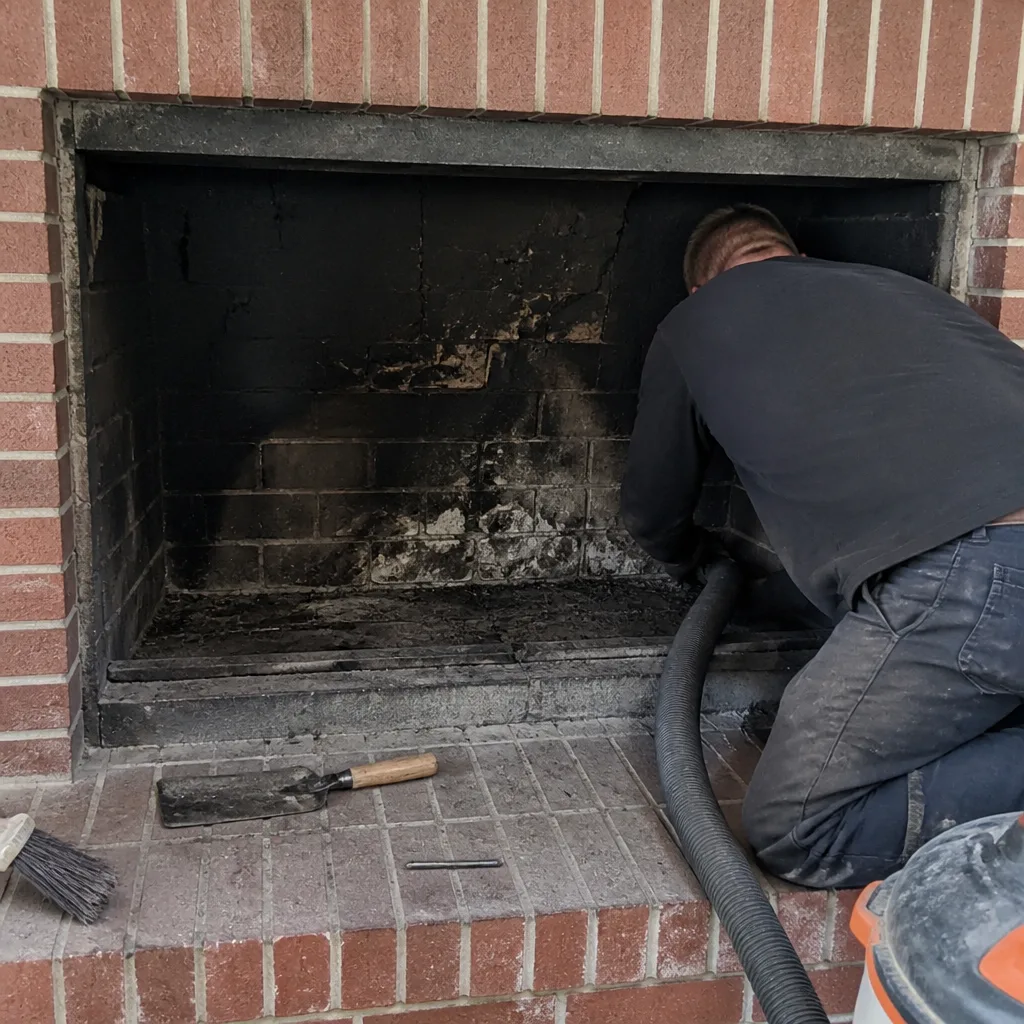 Before
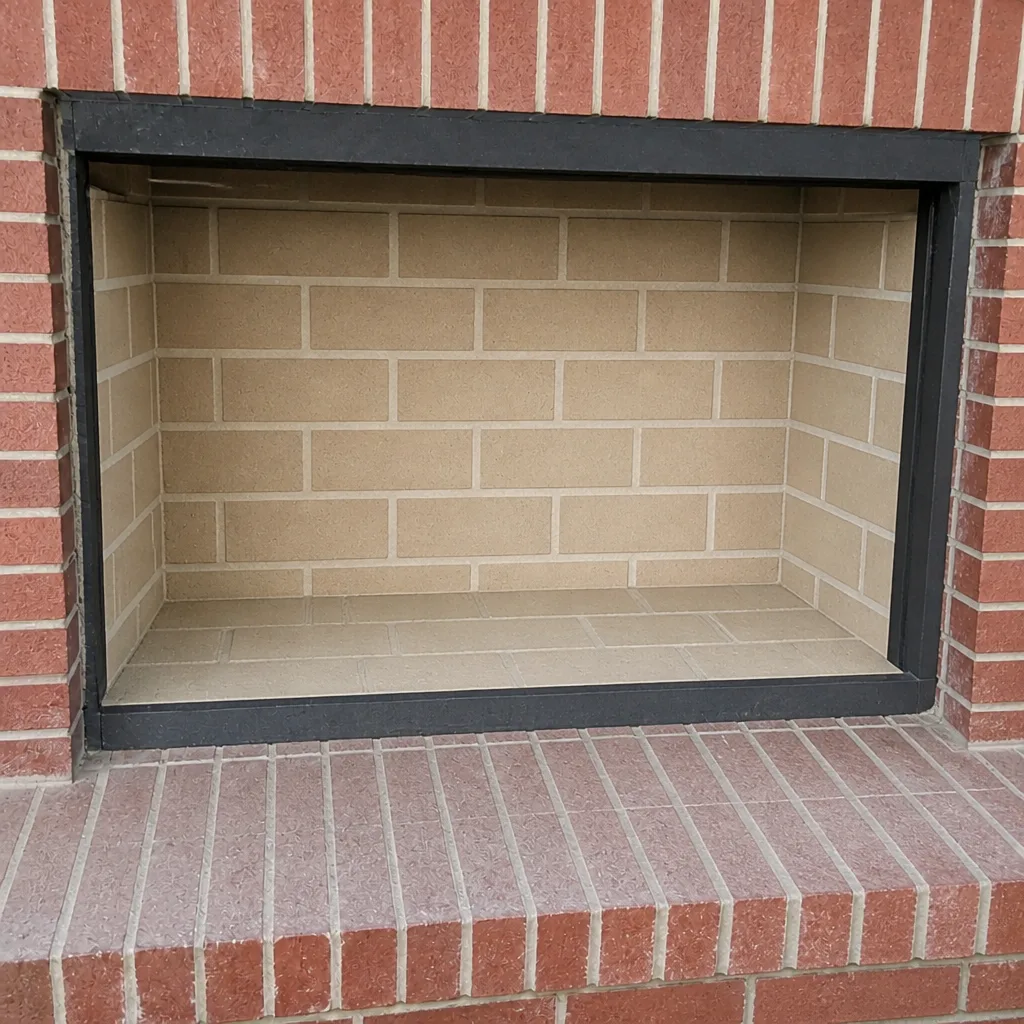 After
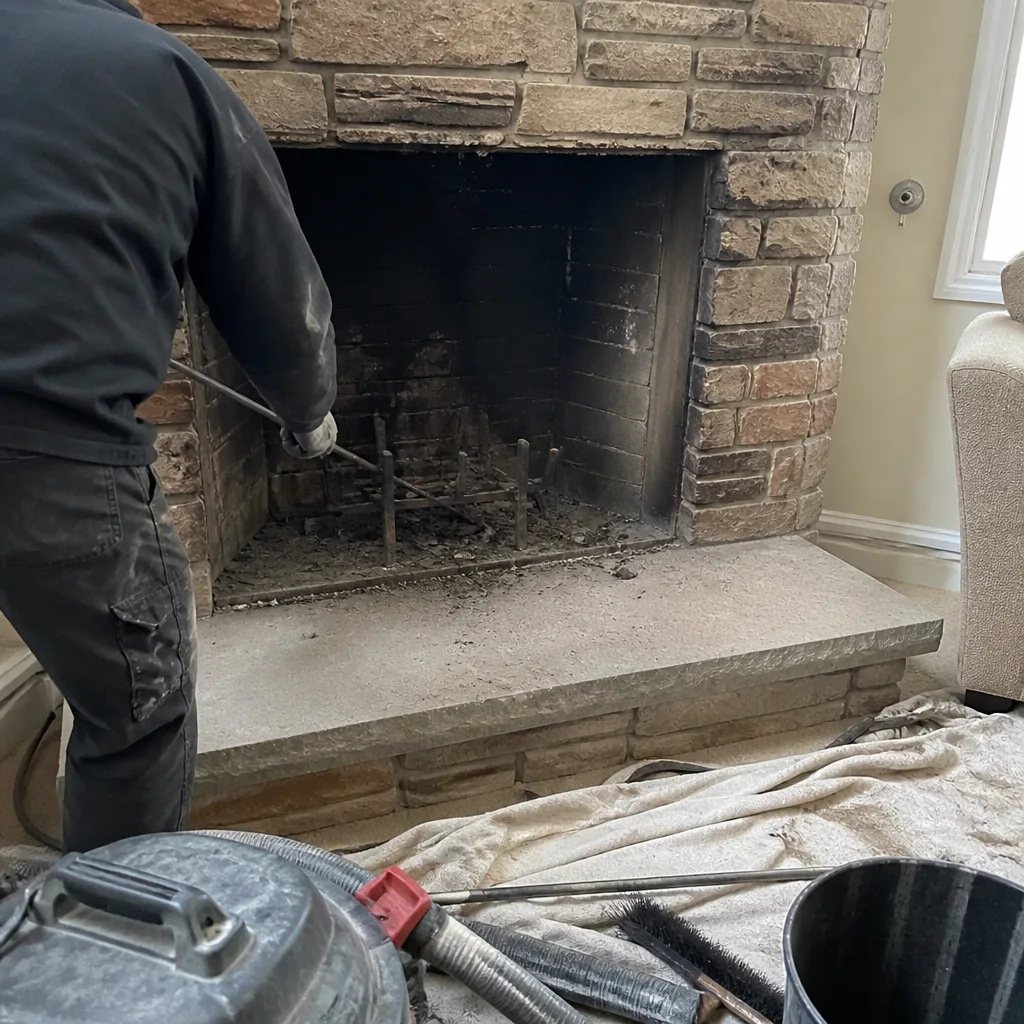 Before
 After
 Before
 After
When to Call a Professional
Call us when you see any of the stop-now signs: white haze in the firebox, cracked firebox walls, flue tile fragments on the firebox floor, or a chemical smell that won’t clear. Call us when the smell appears without a fire, when a fire struggles to draft on still mornings, when the cap is loose or missing, or when you see efflorescence or receding mortar on the exterior. Call us before the season starts if you’ve just bought an Ogden home and don’t know the chimney’s history, or if it’s been a few winters since the last cleaning. In our experience, a technician with up to 9 years on the job can often diagnose the system from those six details and the photos alone, and the written estimate sets the final price before any work is booked. Chimney Sweep Ogden offers free estimates in Ogden. Call (833) 918-6769. We answer 24/7. Fast dispatch from 7am to 7pm, Sunday through Friday.
Frequently Asked Questions
If you can see sooty or flaky deposits above the damper, smell a campfire in the house when no fire is burning, or your fire struggles to draft, the chimney needs cleaning. A visible white haze, cracked firebox walls, or flue tile fragments on the firebox floor mean stop using the fireplace and call a sweep before the next fire. Call (833) 918-6769 for an exact quote. Estimates are free.
Creosote in the flue off-gasses when the chimney is cold and the house is warm, and the smell travels down the flue into the room. It’s strongest in summer because the temperature difference and air pressure push it back into the house. A strong, persistent summer smell usually means heavy creosote buildup. Call (833) 918-6769 for an exact quote. Estimates are free.
A white haze or crazing on the firebox walls is a sign the firebox has been overheated, and the masonry may not be sound. Stop using the fireplace until someone looks at it. Surface crazing is sometimes minor, but it can’t be judged from a photo alone, and the cost of waiting is higher than the cost of a look. Call (833) 918-6769 for an exact quote. Estimates are free.
Cold, still air in the Ogden valley presses down on the chimney and can overcome the weak draft of a cold flue, so smoke rolls out into the room until the flue warms. It usually points to a draft problem, sometimes combined with a narrowing flue. If it smokes on windy afternoons too, suspect a blockage. Call (833) 918-6769 for an exact quote. Estimates are free.
Birds in the chimney usually mean the cap is missing, loose, or the wrong size for the flue. The nest itself is the immediate problem, because it can block the flue and cause smoke and carbon monoxide issues. The right long-term fix is a properly fitted cap from a supplier like Copperfield or Famco. Call (833) 918-6769 for an exact quote. Estimates are free.
White chalky staining on the brick is efflorescence, salt drawn out by water moving through the masonry. It means water is getting into the chimney, usually through a cracked crown, failed flashing, or open mortar joints. It won’t fix itself and it tends to get worse through freeze-thaw cycles. Call (833) 918-6769 for an exact quote. Estimates are free.
The Bottom Line
The warning signs in this guide are all things you can see or smell yourself, and most of them are an invitation to schedule a sweep rather than a reason to panic. The three that aren’t: a white haze in the firebox, cracked firebox walls, and flue tile fragments on the firebox floor. Those mean stop now. Everything else, from the summer campfire smell to efflorescence on the brick, is a signal that the chimney needs attention before the season starts. The trick with all of them is timing: catch them late spring or summer, and you’re booking ahead of the rush. Catch them in October, and you’re in the same queue as everyone else in Ogden. A clean chimney is a safe chimney, and the inspection comes first. We inspect before we recommend, not the other way around.
Contact
If any of these signs sounds familiar, don’t wait for the first cold snap to sort it out. Call Chimney Sweep Ogden at (833) 918-6769 for a free estimate. We answer 24/7. Fast dispatch from 7am to 7pm, Sunday through Friday. A specialist can look at the whole system, from the firebox to the crown, and tell you what’s a monitor-and-schedule issue and what needs to be dealt with now.
Written by the team at Chimney Sweep Ogden.