
Top Signs You Need Chimney Cleaning Service – Don’t Ignore These
If you’re wondering whether your chimney needs cleaning, the honest answer usually lives in three places: what you see, what you smell, and how your fire behaves. A slow-starting fire that used to light easily, a faint barbecue smell in July, or a flaky black crust around the damper are all signals that creosote has built up and your flue is no longer moving smoke the way it should. If any of those sound familiar, it’s time to schedule a sweep – and if you’d rather have a pro take a look than guess, call (833) 918-6769.
Most homeowners wait for something dramatic. A puff of smoke into the living room. A chirping carbon monoxide alarm. By then, the problem has been building for two or three heating seasons, quietly narrowing the flue and raising the risk with every fire. The signs below are the ones we check for first, organized by what they actually tell you.
What Are the Visual Signs Your Chimney Needs Cleaning?
The clearest sign is oily black residue inside the firebox, on the damper, or on the smoke chamber walls above the fireplace opening. That coating is creosote, and its texture tells you a lot. Soft, sooty buildup is early-stage. Shiny, hardened, or flaking creosote is a later stage that ignites more easily and is harder to remove without professional tools. If you can see a crust that looks like cracked tar or black glass, stop burning and get an inspection before your next fire.
Other visual cues worth checking:
- Flaking or curling deposits on the flue walls, visible with a flashlight pointed up past the damper.
- Soot staining on the fireplace face or above the mantel, which often means smoke is spilling out of the firebox rather than going up.
- Crumbling mortar at the crown or in the smoke chamber – a structural issue that develops faster in Ogden’s freeze-thaw cycles.
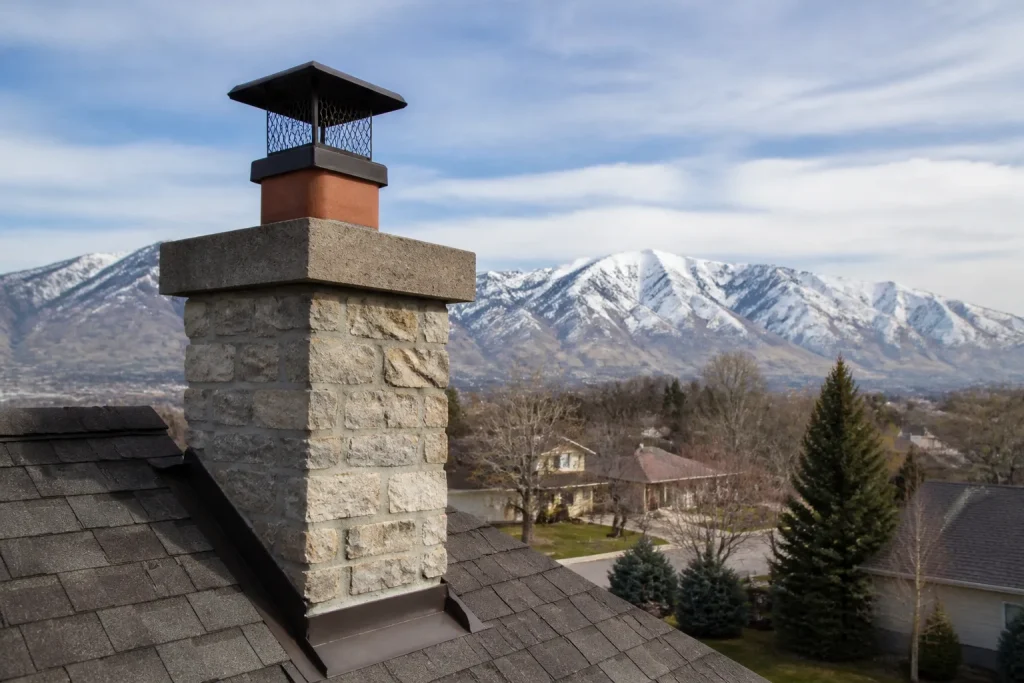
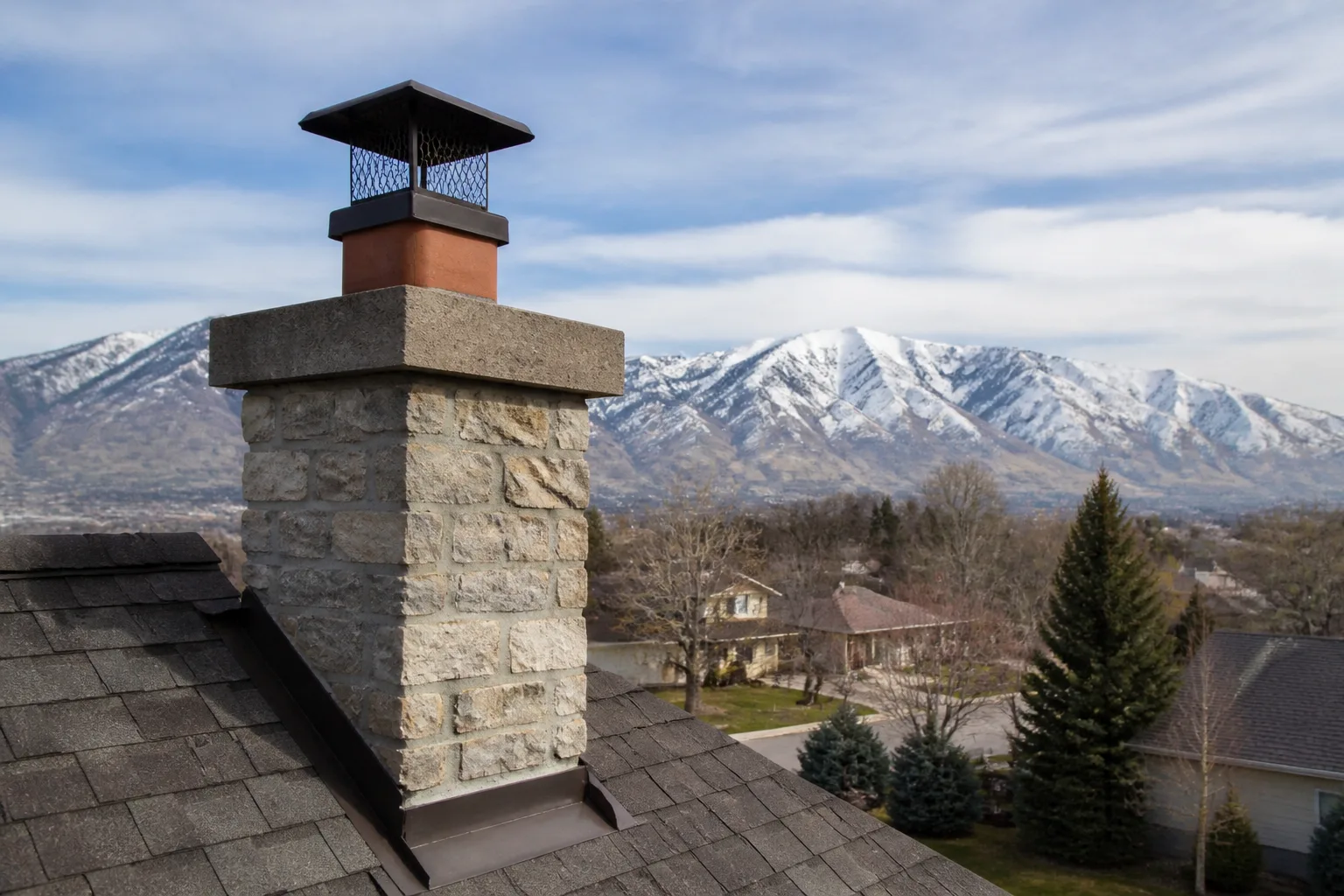
- A cap that’s missing, bent, or clogged with debris. A damaged cap is one of the easiest ways for water, animals, and nesting material to get into the flue.
Visual inspection is also where our chimney cap & crown work usually comes up. A cap that’s failed lets moisture in, and moisture is what turns a simple sweep into a repair. We’d rather fix the top of the system before it damages the liner below.
Why Does My Fireplace Smell in Summer?
A fireplace that smells like stale smoke or barbecue in warm weather is telling you there’s creosote in the flue. During the heating season, the draft pulls odors up and out. In summer, the pressure in your home flips – warm air rises, and if the chimney is cooler than the house, it can actually push air back down, carrying that creosote smell into the living room. The smell is strongest on humid days, when moisture in the air reacts with the deposits.
There are two things to separate here. A faint smoky smell in an unused fireplace is usually creosote and needs a sweep. A damp, musty, or earthy smell – especially after rain – points to water getting in through a failed crown, a missing cap, or cracked mortar. Those are different repairs. We see this a lot in Ogden homes where the fireplace sits unused from April through October and the smell shows up right around the first stretch of hot weather.
If the odor has been there for more than one summer, don’t write it off as “just how old fireplaces smell.” In our experience, that smell almost always traces back to buildup that a sweep can remove and a visual inspection can confirm.
What Does a Slow-Starting Fire Tell You About Your Chimney?
A fire that’s hard to start is usually a draft problem, not a wood problem. When creosote narrows the flue, less air moves up the chimney, and smoke has nowhere to go but sideways into the room. If you’ve changed your wood, changed your fire-starting method, and the fire still struggles, the flue is the next place to look.
Performance signals to watch for:
- Smoke rolling back into the room when you first light a fire, even with the damper fully open.
- A lazy, slow-moving draft where the flames sit low and smolder instead of catching.
- Gray or dark smoke that lingers instead of drifting up and clearing quickly.
- Burning through wood faster than usual, which can mean the fire is working harder to overcome a restricted flue.
If any of these match your experience, it’s worth booking a professional chimney sweep before the next heating season. A quick sweep and a visual check will tell you whether the problem is buildup, a block, or a draft issue that needs a different fix.
Should You Clean By Time or By Burn Volume?
Burn volume is the better guide. Most homeowners hear “once a year” and assume that’s the rule, but a fireplace used a few times a month and one used weekly through a Utah winter need very different schedules. Professional sweeps typically work from a cord-of-wood benchmark – roughly one cord of wood burned before a sweep is due – rather than the calendar alone.
Here’s what changes the math:
- Wood type: unseasoned or resinous wood leaves more creosote per burn.
- Fire behavior: smoldering, low-air fires produce far more buildup than hot, clean burns.
- Appliance type: a wood insert, a gas log set, and an open fireplace each have their own cleaning interval.
For Ogden households that burn through a full cord or more each winter, that benchmark matters. You might be due for a sweep in the middle of the season, not just at the start. A quick conversation about how much wood you go through in a typical winter will tell us a lot about what your flue is actually seeing.
Why Do Animals, Settling Noises, and Creosote Popping Sound Different?
Sounds from a chimney have different causes, and each needs a different response. Scratching, fluttering, or chirping usually means an animal has gotten in through a missing or damaged cap. A single dull thud after a temperature change is often a piece of mortar or flue tile settling. A rhythmic crackling or popping sound during a fire is a sign creosote in the flue is igniting. That last one is not a normal fire sound – it’s a chimney fire.
Bird and squirrel noises tend to be active during the day and stop at night. Settling noises are sudden and happen once. Popping or roaring is tied directly to a burning fire and deserves an immediate response, not a next-season appointment.
A properly fitted cap from Olympia Chimney or a similar manufacturer-sourced cap is the most reliable way to keep animals out. Jobs like this are best handled before nesting season, so the cap is in place and secure when birds and squirrels start looking for shelter in Ogden’s shoulder seasons.
Which Sign Means Stop Burning Immediately?
The one sign that means stop using the fireplace right now is a roaring fire that sounds like a freight train or a chimney fire that doesn’t settle down. A loud rushing or rumbling noise coming from the flue, a popping or crackling sound from inside the chimney walls, or smoke pushing into the room in a way it hasn’t before all warrant shutting the damper down and closing the glass doors until a professional can inspect the flue. Creosote that has ignited damages the liner, and a damaged liner is a serious carbon monoxide risk if you keep burning.
The same “stop now” rule applies if a carbon monoxide alarm ever sounds while a fire is burning. Get out, ventilate, and call for an inspection before the next fire. We’d rather show up for an inspection that finds nothing than handle a situation that has already done damage.
This is why we inspect before we recommend, and why our inspections include a camera pass and a report you can see for yourself. Nothing on the repair list should be a mystery. If you’ve had a suspected chimney fire, schedule a full inspection through our fireplace repair service before relighting.
How Do Ogden’s Spring and Fall Seasons Affect Your Chimney?
Ogden’s shoulder seasons create some of the toughest conditions for a chimney system. Warm days followed by cold nights mean repeated freeze-thaw cycles on the crown and the masonry – water gets into small cracks during the day, expands overnight, and widens the crack by spring. A crown that looked fine in October can be cracking by April, and most homeowners never look at it.
Spring and fall are also when temperature swings confuse the draft. Warm outdoor air can push creosote odors back into the house, and cool, damp air can make a fire harder to start on the first cool evening of the season. If you notice the fire acting strangely in late September or early October, don’t assume it’s a weather fluke. Book an inspection before the first real burn.
The Bottom Line
The signs that matter most are the ones that show up quietly: a smell in summer, a hard-to-start fire, a flue that’s visibly narrower than it used to be. Add in the visual cues – black oily residue, flaking creosote, a damaged cap – and you have a clear diagnostic list. When in doubt, schedule a sweep and a visual inspection. Our technicians have up to 9 years of experience, and we work with professional-grade liner and cap systems from DuraFlex, HeatShield, and other manufacturers we trust for a proper repair.
If you’re in Ogden and want a straight answer about your chimney, we offer free estimates. Call (833) 918-6769. We answer 24/7. Fast dispatch from 7am to 7pm, Sunday through Friday.
Related services in Ogden
If any of the signs above point to a specific repair, we handle it in-house. Our team covers the full chain from sweeping to liner work and cap installation, and you can see what we do at Chimney Sweep Ogden.
Frequently Asked Questions
Most wood-burning fireplaces should be swept roughly once per cord of wood burned, or at least once a year if used regularly. A gas fireplace with a properly vented flue needs less frequent cleaning. If you’re not sure, an inspection will tell you exactly what’s in the flue. Call (833) 918-6769 for an estimate.
Creosote keeps building up, the flue narrows, draft gets weaker, and carbon monoxide and smoke have fewer places to escape. Eventually the creosote can ignite and start a chimney fire that damages the liner. The cost of a sweep is far smaller than a reline. If it’s been two or more seasons, call (833) 918-6769 to book an inspection.
No. A persistent smoky or barbecue smell usually means creosote has built up and is being pushed back into the house by summer heat and humidity. A musty, damp smell points to water intrusion instead. Both are worth checking with a visual inspection. Call (833) 918-6769 for a free estimate.
A basic flashlight inspection of the firebox and damper is fine for any homeowner. Full flue cleaning and any work involving the liner, crown, or cap should go to a trained professional, especially since creosote deposits can ignite and damaged liners can let carbon monoxide into the home. For a proper sweep and inspection, call (833) 918-6769.
Written by the team at Chimney Sweep Ogden.
Need Chimney Cleaning Help?
Call Chimney Sweep Ogden - the local pro we connect you with is licensed and insured, here with fast help in Ogden.
(833) 918-6769