
Copperfield Chimney Sweep in Ogden: A Homeowner’s Guide
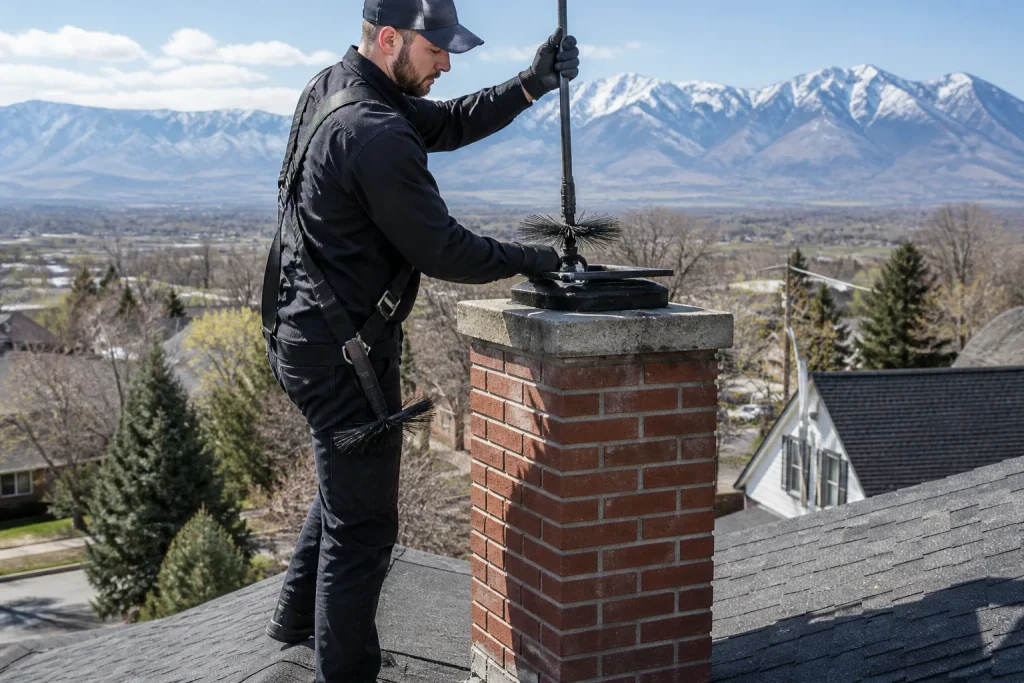
If you’ve been searching for “Copperfield chimney sweep Ogden” and expecting to book an appointment, here’s the part most people get wrong: Copperfield Chimney Supply doesn’t clean chimneys. It’s a wholesale trade supplier, the company behind the brushes, rods, liners, and tools that professional sweeps buy through commercial accounts. So when an Ogden sweep shows up with Copperfield equipment, you’re seeing a signal, not a service name. That signal matters more than you’d think.
We put this guide together because homeowners deserve to know what’s actually going on behind the tools and materials used on their chimney. If you’d rather skip the research and get a straight answer about your own system, call (833) 918-6769. We answer 24/7. Fast dispatch from 7am to 7pm, Sunday through Friday.
What Is Copperfield Chimney Supply, and Why Should You Care?
Copperfield is a trade-only distributor of chimney and fireplace equipment. You won’t find their wares on a big-box shelf or an online marketplace. Their customer base is professional sweeps and installers who hold commercial accounts, which is the whole point: the trade channel keeps retail-grade knockoffs out of the professional supply chain.
Here’s why that distinction lands on your roof and in your flue. Any chimney company can buy a brush from a hardware store. Bushings that shed bristles inside a flue, rods that flex more than they should, or caps that rust through in two winters are the kind of problem a professional account holder avoids by buying from a trade source. When a technician’s equipment comes from a name like Copperfield, Famco, or Olympia Chimney, they’ve committed to a supplier that serves the trade, not the hobbyist.
In our experience, equipment sourcing is one of the quietest ways to judge a chimney professional before they’ve touched a single brick. It’s not a guarantee of quality on its own, but it’s a strong signal. We stock and install products from industry-recognized suppliers including Copperfield, DuraFlex, HeatShield, Gelco, Olympia Chimney, and Famco for exactly this reason.
Which Products in a Chimney Job Are Likely Copperfield-Sourced?
Most of what a sweep uses on a typical Ogden chimney job comes through the trade channel, and Copperfield is one of the suppliers that feeds it. Here’s what to expect:
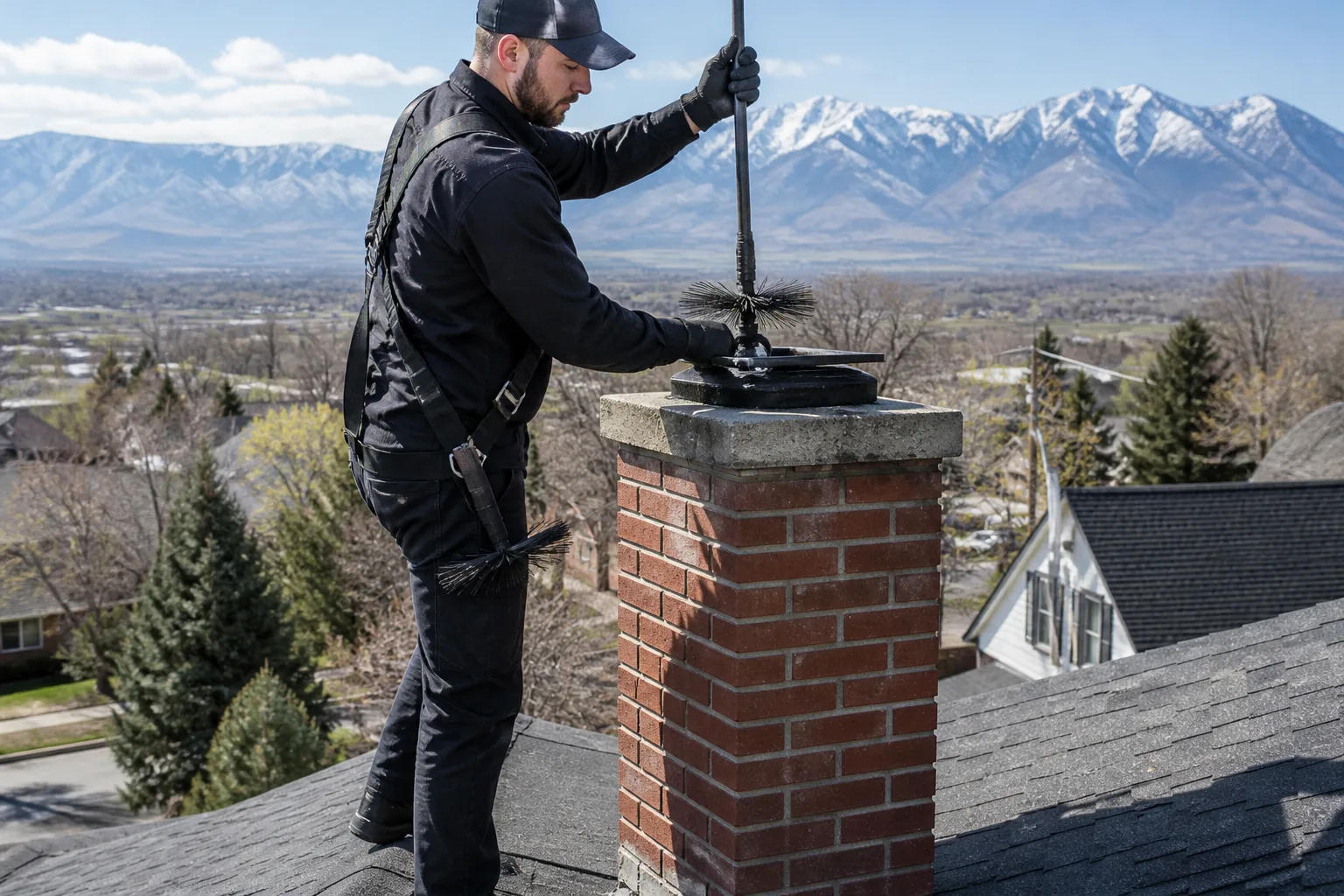
- Brushes and rods. The sweep kit itself. Trade-grade polypropylene brushes and sectional rods that flex around offsets without snapping and hold their stiffness season after season.
- Chimney caps. Caps manufactured to spec, not the stamped-metal versions sold at retail. This matters in Ogden’s wind and snow load.
- Liner systems. Stainless relining components, including flexible liners and the fittings that connect them. This is where the trade distinction has the most impact on how long the system lasts.
- Relining and repair components. Adapters, connectors, top plates, and hardware that don’t get sold at retail because the trade only needs them in commercial quantities.
- Sealants and masonry components. Industry-grade sealants and repair compounds used in liner restoration and crown work.
One caveat worth stating plainly: a generic liner installed correctly outperforms a brand-name liner installed badly, so product origin is one factor among several. But when everything else is equal, trade-grade components last longer under Ogden’s temperature swings, and that’s not a small thing.
How Do Professional-Grade Liners Compare With Hardware-Store Alternatives?
A chimney liner has to survive some of the harshest conditions in a home. Creosote residue, flue gas condensation, and cycles that push a stainless liner from a hot fire to a winter night on the roof and back again. Ogden’s high-desert climate makes it worse than most: cold nights and warm days expand and contract metal repeatedly, and that’s where retail-grade liners fail first.
Here’s what separates trade-grade from retail-grade in practical terms:
- Wall thickness and alloy spec. Professional liner systems are built to a spec a trade supplier publishes, not whatever a discount marketplace buyer negotiated. Thinner walls fail faster under thermal cycling.
- Continuous runs, not joints. Liner systems like DuraFlex are designed to be installed as continuous flexible runs from the firebox to the crown. Less joint failure risk, fewer places for creosote to collect.
- Compatibility with liners being restored. HeatShield ceramic resurfacing works with defined liner and masonry conditions. That’s a repair a retail component can’t touch.
- Cap and crown hardware. Fasteners and connections that are rated for a chimney environment, not just for a fence.
When you combine the seasonal contraction here with creosote chemistry, retail-grade components just don’t have the margin for error.
How Do You Read an Invoice to Spot Trade-Quality Work?
Most homeowners don’t know what to look for on a chimney invoice, so here’s the short version. A well-written invoice should identify the products used, the liner system or cap manufacturer, and the quantity. If your invoice says only “liner replacement” or “cap installed” with no product detail, that’s worth a follow-up question.
Ask these questions on the spot:
- What brand of liner was installed? If the answer is “a good one,” ask for the manufacturer name. Copperfield, DuraFlex, HeatShield, and Olympia Chimney all publish specs you can verify.
- What thickness or wall spec? A trade-grade liner has a stated spec. A retail-grade flexible liner often doesn’t.
- What cap brand, and what’s it rated for? Manufacturer-sourced caps are stamped with model information. Jobsite fabrications aren’t.
- What sealant was used? Industry-grade sealants have a product name and a spec sheet.
- Is the warranty tied to the product? A liner system from a professional supplier carries a defined warranty. A generic liner often has none.
If the technician gets defensive about these questions, that tells you something. If they hand over the product name and spec without hedging, they’ve got nothing to hide. In our experience, a straight answer to question one is usually the only one you need.
How Do You Vet an Ogden Chimney Company Using Material Questions?
The material question is a useful filter because it reorders everything else. A technician’s willingness to name their supplier and let you verify the spec tells you more about the odds of a good repair than a glossy brochure or a hand-drawn diagram.
Here’s what good answers look like:
- They name their supplier without pause. A trade-channel supplier has a public spec, so naming it costs them nothing.
- They quote thickness or wall type concretely. Trade-grade liners have wall specs; retail sleeves don’t always.
- They identify the cap by manufacturer. A correctly sourced cap has a model number, not a “we build them ourselves” answer.
- They can explain what wasn’t replaced and why. Trade-quality shops know that a sweep and an inspection are distinct from a liner replacement.
- They document with photos and a camera report. A photo of the flue from a camera inspection is a shared fact; a verbal “you need a new liner” is not.
These questions also work on us. We’re happy to answer them because we’ve built the service around that transparency: sweeping, inspection, repair, fireplace repair, and chimney cap & crown work all come from one specialist, and we name our material sources because that’s how a homeowner should evaluate us.
That’s also why we don’t do HVAC, roofing, or general masonry. A crew that spends its days sweeping chimneys sees chimney problems more accurately than a generalist crew that also does gutters and drywall. The diagnostic accuracy improves because the scope stays tight.
When Should You Call a Pro Instead of Waiting?
If your chimney hasn’t been swept in a while and you’re seeing visible signs like crumbling mortar joints, a missing cap, or smoke backdrafting into the room, it’s time to call. The same goes for any home you’ve recently purchased where the chimney’s history is unknown. If a chimney fire has happened or there’s a strong creosote smell in the house, treat it as urgent.
Do not put your hands into a flue or attempt a liner inspection yourself. Camera inspection and liner evaluation are where the real danger lives, and a trained professional with proper equipment is the right call every time. You can schedule an inspection as a standalone visit; it’s not a sales tool, it’s a documented look at your system, and we’ll tell you plainly when a repair can safely wait.
That’s also the answer to the most common hesitation we hear: “Do I really need a new liner?” Not always. Sometimes a ceramic resurfacing with HeatShield is the right call, sometimes it’s a sweep and a cap, and sometimes the liner is genuinely failing. The difference is evidence, and you get to see the camera footage before anything is recommended.
Related services in Ogden: if you need a regular appointment, our chimney sweep service covers the whole flue; for caps and crowns specifically, see the cap and crown page; and for fireplace-level repair, the fireplace repair page is the place to go. If you want the full picture of what we do and where we work, start with Chimney Sweep Ogden.
Key Takeaways
- Copperfield is a wholesale trade supplier, not a service company; seeing a technician use their tools signals a commercial account and trade-grade equipment.
- Trade-grade liners and caps have published specs; retail alternatives often don’t.
- Ogden’s temperature swings make wall thickness and alloy spec matter more, not less.
- Ask for product names and specs on every chimney repair invoice; a confident answer is a useful signal and a vague one is too.
- If nothing is photographed and nothing is documented, it’s worth calling someone else.
The Bottom Line
Copperfield equipment is a quiet clue, not a headline. What it tells you is that a professional has bought into the trade supply chain: real products, real specs, and a commercial account that requires proof of the work. That’s the filtering signal a homeowner needs when vetting chimney work in Ogden, and it’s the reason we name our suppliers in the first place.
If you’re in Ogden and need help, Chimney Sweep Ogden offers free estimates. Call (833) 918-6769. The quote is based on what the camera shows and nothing else, and it’s set in writing before any work begins. Our technicians have up to 9 years of experience, and every estimate includes access to trade-grade material from Copperfield, DuraFlex, HeatShield, Gelco, Olympia Chimney, and Famco. If it can wait, we’ll say so; if it can’t, we’ll show you why. Call (833) 918-6769. We answer 24/7. Fast dispatch from 7am to 7pm, Sunday through Friday.
Frequently Asked Questions
No. Copperfield is a wholesale trade supplier to the chimney industry, not a service company you can hire. If you’ve found “Copperfield” in a search for chimney sweeps, the company that uses their equipment is the one to call. In Ogden, we stock and install from Copperfield and other trade suppliers, and we’re happy to put the product names in writing on your estimate.
It’s a strong signal, not a guarantee. Trade-grade equipment implies a commercial account and a professional standard of sourcing, but the quality of the install still matters more. Ask the technician to name the liner or cap manufacturer and show you the spec; a confident answer with documentation is the real measure. Call (833) 918-6769 for a free estimate if you want a straight answer on your own system.
A correctly installed trade-grade stainless liner typically lasts significantly longer than a retail-grade sleeve, though exact lifespan depends on use, fuel type, and maintenance. Ogden’s freeze-thaw and wide temperature swings stress metal more than a mild climate would, which raises the stakes on wall thickness and alloy spec. A camera inspection will tell you whether yours is holding up or failing early, and it’s worth calling us to look before creosote buildup becomes a bigger problem.
Often, yes. Look for a product name, manufacturer, and spec on the invoice. Retail-grade liners often don’t have a published spec, so the invoice will say something generic like “liner installed” with no detail. If you’re looking at an invoice from a past job and it’s missing that information, call (833) 918-6769 and we’ll explain what to ask the installer.
Written by the team at Chimney Sweep Ogden.
Need Chimney Cleaning Help?
Call Chimney Sweep Ogden - the local pro we connect you with is licensed and insured, here with fast help in Ogden.
(833) 918-6769